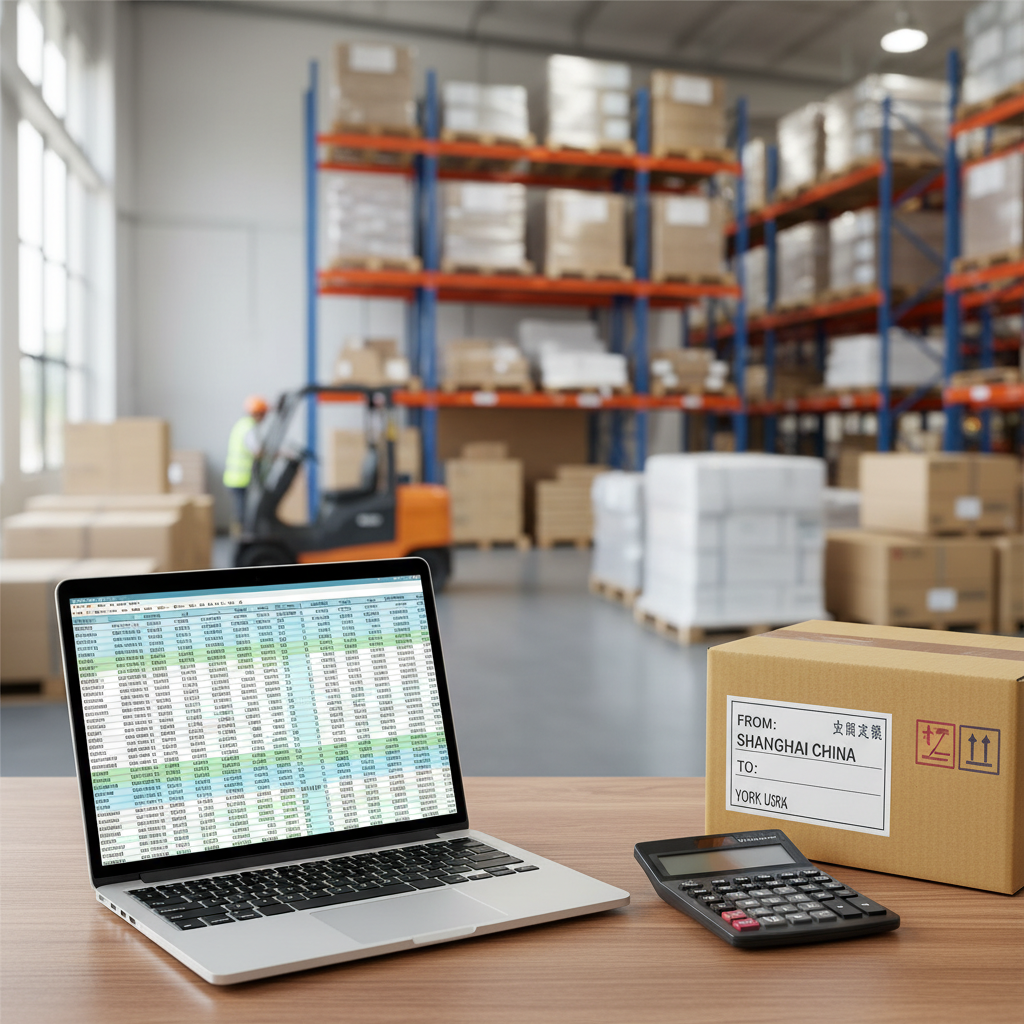
The Reality of Sourcing: Beyond the Sticker Price
For many e-commerce entrepreneurs and small business owners, the allure of sourcing from China begins with a price tag on 1688.com or Taobao that seems almost too good to be true. However, the most common mistake beginners make is equating the marketplace price with the final total cost of sourcing from China. If you build your business model on the product price alone, your profit margins will evaporate before your first shipment even clears customs.
Calculating your “landed cost”—the total price of a product once it has arrived at your doorstep—is the difference between a thriving resale business and a costly hobby. In this guide, we will pull back the curtain on every expense involved in the agent-assisted buying process, ensuring you can budget with surgical precision.
The 5 Main Cost Components: From Marketplace Price to Doorstep Delivery
To calculate the total cost of sourcing from China, you must view the journey of your product in five distinct stages. Each stage carries its own set of fees that must be aggregated to find your break-even point.
1. The Product Cost (Marketplace Price)
This is the base price listed on platforms like Taobao, Weidian, or 1688. It is important to note that prices are listed in Chinese Yuan (CNY). When paying through an agent like CNGoodsBuy, the exchange rate used may differ slightly from the mid-market rate found on Google, as it accounts for currency conversion risks and transaction fees from payment processors like PayPal or Stripe.
2. Domestic Shipping (Within China)
Before your goods can be shipped to you, they must travel from the seller’s factory or warehouse to your sourcing agent’s warehouse. While some sellers offer free domestic shipping, many charge a nominal fee (usually 10–25 CNY). While small for a single item, these costs add up when sourcing from multiple vendors.
3. Agent Service Fees
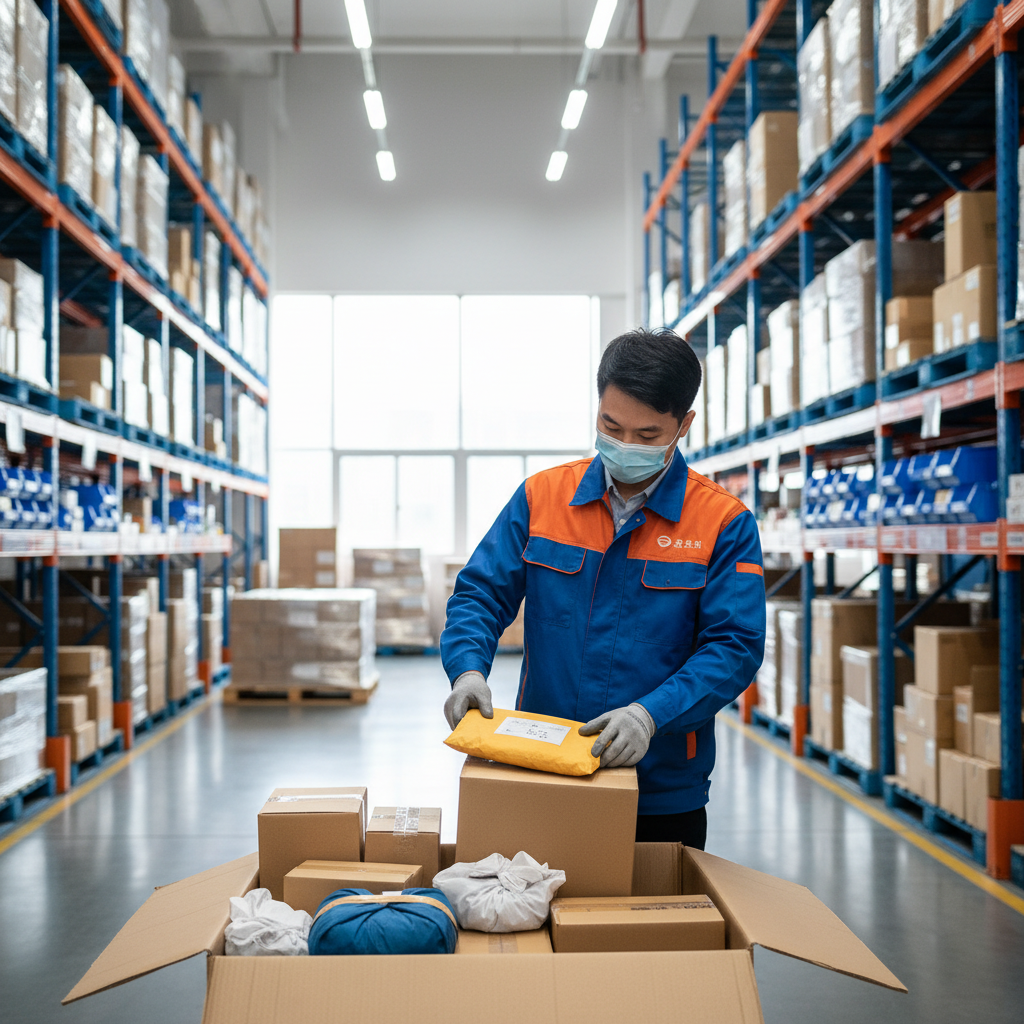
Your sourcing agent is your eyes and ears on the ground. They handle communication, quality control, and consolidation. Most agents charge a percentage of the product cost (typically 3% to 10%) as a service fee. This fee covers the overhead of managing your orders and providing a secure platform for transactions.
4. International Shipping and Logistics
This is almost always the largest expense after the product itself. International shipping isn’t just about weight; it’s about volume and speed. Choosing between a slow sea freight line and a fast air express line (like FedEx or DHL) can change your unit cost by several dollars.
5. Customs Duties and Import Taxes
Depending on your country’s de minimis threshold (the value below which no duty is charged) and the classification of your goods, you may owe import taxes. In the US, the threshold is currently $800, while European and UK buyers face VAT on almost every import.
Understanding Agent Service Fees: What’s Included and Why It’s Worth It
New buyers often ask: “Can’t I just buy directly and save the agent fee?” While possible on some platforms, the risks usually outweigh the 5-8% savings. When you pay a service fee to CNGoodsBuy, you aren’t just paying for a middleman; you are buying insurance against disaster.
- Procurement and Negotiation: Agents handle the Chinese-language communication, ensuring you get exactly what you ordered.
- Free Storage: Most agents offer 60–90 days of free warehouse storage, allowing you to buy from multiple sellers over several weeks and ship them all in one box to save on international freight.
- Fraud Protection: If a seller sends a brick instead of a laptop, the agent identifies this at the warehouse, allowing for an immediate refund before the item ever leaves China.
The Hidden Costs of Sourcing: QC Photos and Specialized Packaging
To truly master the total cost of sourcing from China, you must account for the “micro-costs” that occur at the warehouse level. These are often categorized as Value-Added Services (VAS).
Quality Control (QC) Upgrades
Standard agents provide 3–5 basic photos. However, if you are a reseller, you may need high-definition photos, measurements of specific seams, or even video testing of electronics. These services usually cost between $1 and $5 per item but prevent the massive loss of shipping a defective product across the ocean.
Protective Packaging
International shipping is brutal. Boxes are thrown, stacked, and subjected to humidity. To ensure your goods arrive in sellable condition, you may need to pay for:
- Bubble Wrap: Essential for fragile items.
- Moisture-Proof Packaging: A plastic wrap around the outer carton to prevent water damage during sea transit.
- Corner Protectors: Reinforced cardboard or plastic corners to prevent the box from collapsing.
- Vacuum Packaging: Used for clothing to reduce volume (and thus reduce shipping costs).
Demystifying International Shipping: Actual Weight vs. Volumetric Weight
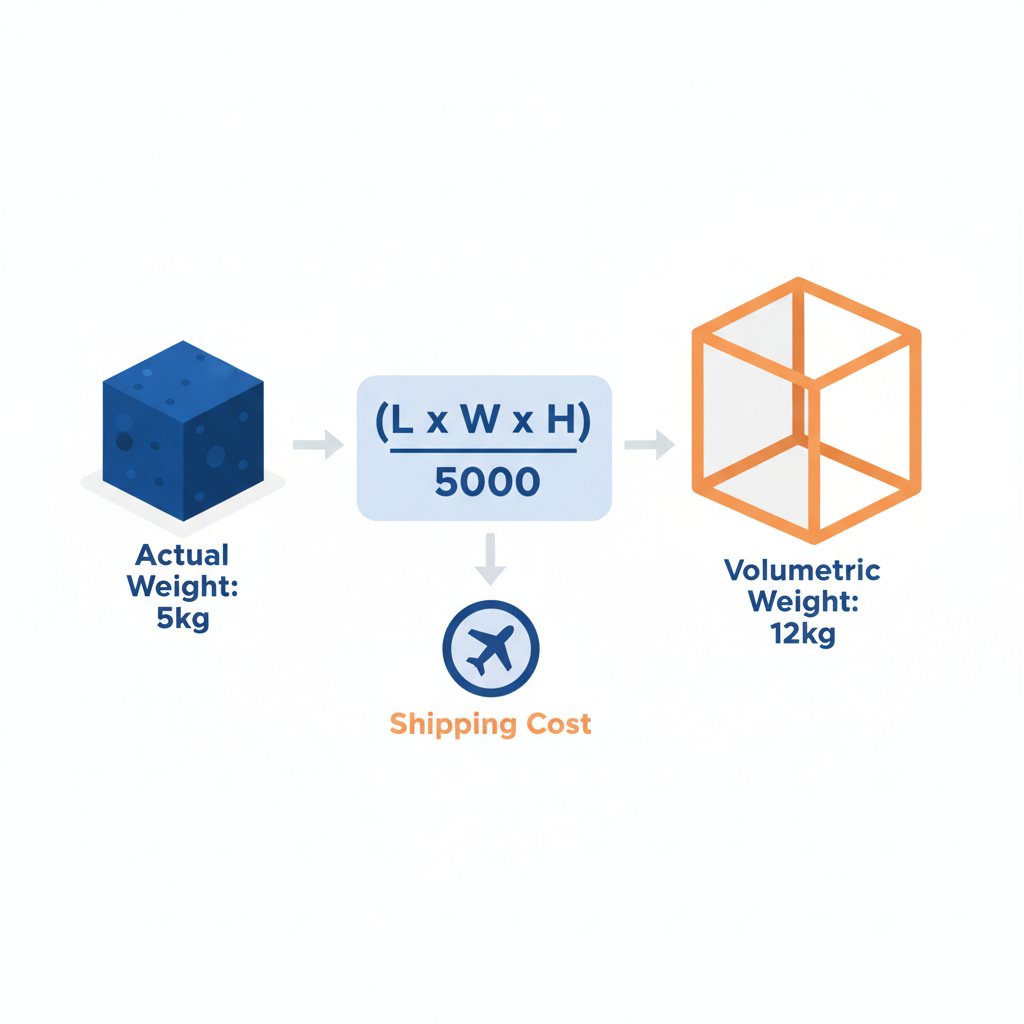
This is where most budgeting goes wrong. In the world of logistics, a kilogram of lead is cheaper to ship than a kilogram of feathers. This is because of Volumetric Weight (also known as Dimensional Weight).
Couriers calculate shipping costs based on whichever is greater: the actual weight on the scale or the space the box occupies. The standard formula for volumetric weight is:
(Length x Width x Height in cm) / 5000 = Volumetric Weight in kg
If you are sourcing bulky items like plush toys, pillows, or large plastic containers, your shipping cost might be double what you expected based on weight alone. Always ask your agent for a pre-packaging estimate or use vacuum sealing to compress soft goods.
Calculating Your Landing Cost: A Practical Example
Let’s look at a real-world scenario for a small business owner sourcing 50 high-quality cotton hoodies for their brand.
| Expense Item | Cost (USD) |
|---|---|
| Product Cost (50 Hoodies @ $15/each) | $750.00 |
| Domestic Shipping (Seller to Warehouse) | $12.00 |
| Agent Service Fee (approx. 7%) | $52.50 |
| QC Photos & Reinforced Packaging | $15.00 |
| International Shipping (25kg via Air Freight) | $280.00 |
| Import Duties & Fees (Estimated) | $0.00 (Under US De Minimis) |
| Total Landed Cost | $1,109.50 |
| Cost Per Unit | $22.19 |
In this example, while the “sticker price” was $15.00, the true total cost of sourcing from China is $22.19 per unit. If this reseller plans to sell the hoodies for $50.00, they now know their gross profit is $27.81 per unit, rather than the $35.00 they might have initially assumed.
How to Optimize Your Costs
Now that you understand the variables, how do you bring that number down?
- Consolidate: Never ship one item at a time. The first 500g of any shipment is the most expensive. Adding more items to a single parcel lowers the average cost per kilogram.
- Choose the Right Line: If you aren’t in a rush, “Tax-Free” lines or Sea Packets can save you 40-60% compared to DHL or UPS.
- Remove Original Packaging: If you are buying shoes for resale, consider having the agent discard the heavy cardboard shoeboxes to save on volumetric weight.
Ready to Start Sourcing?
Understanding the math is the first step toward a successful sourcing strategy. By accounting for every yuan and cent, you can scale your business with confidence, knowing exactly what your margins look like before you ever click “buy.”
At CNGoodsBuy, we specialize in helping international buyers navigate these complexities. Whether you are buying from 1688, Taobao, or private manufacturers, our manual order service ensures you get transparent pricing and expert logistics support.
Start Your Manual Order with CNGoodsBuy Today
Frequently Asked Questions
Q: Does the exchange rate affect my total cost?
A: Yes. Currency fluctuations can change your costs by 1-3% weekly. Most agents update their internal exchange rates regularly to reflect market changes. It is wise to add a 2% buffer to your budget for currency volatility.
Q: What is the cheapest way to ship heavy items?
A: For shipments over 21kg, “Sea Freight” or “Railway” lines (available for Europe) are significantly cheaper than air. While they take 30-45 days, the cost per kg can be as low as $2-$4, compared to $10-$15 for air.
Q: Can I avoid customs duties?
A: You should always budget for duties legally. However, many agents offer “Tax-Free” or “Tariff-Insurance” lines where the logistics provider handles the customs clearance and taxes on your behalf, providing you with a fixed, all-in price.